

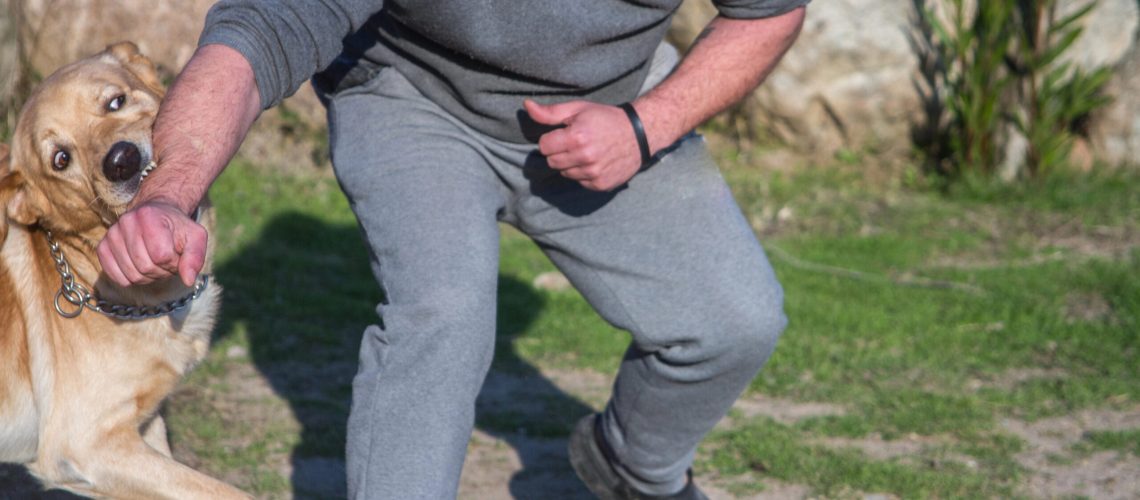
If you’ve been bitten by a dog while visiting an apartment complex, walking through a public park, or staying at a rental property, you’re likely dealing with painful injuries and mounting medical bills. You might be wondering who’s responsible for your damages when the bite didn’t happen on the dog owner’s property. The answer isn’t always straightforward, but California law provides several avenues for compensation depending on where the attack occurred and who had control over the premises.
Understanding liability for dog bites on public and rental property can be complex, involving multiple parties and different areas of law. This guide will help you understand your rights, identify potentially liable parties, and take the right steps to protect your claim for compensation.
Understanding California's Dog Bite Laws
California operates under a strict liability statute for dog bites, found in California Civil Code Section 3342. This law makes dog owners automatically liable for injuries their dogs cause to others, regardless of whether the dog has a history of aggression or the owner knows about dangerous tendencies.
Under this statute, you can recover compensation from a dog owner if you can prove that you were lawfully present where the bite occurred and that you didn’t provoke the animal. This strict liability applies whether the bite happens on the owner’s property, public property, or someone else’s private property.
However, when a dog bite occurs on rental property or public spaces, the situation becomes more complicated because additional parties may share responsibility for your injuries. Property owners, landlords, and government entities can sometimes be held liable alongside or instead of the dog owner, depending on the specific circumstances of your case.
Dog Bite Liability on Public Property
When a dog bite occurs on public property such as parks, sidewalks, beaches, or recreational areas, multiple parties may bear responsibility for your injuries. The primary liable party is typically still the dog owner under California’s strict liability law, but government entities that maintain public spaces can also face liability under certain circumstances.
Government Entity Liability
California Government Code Section 815.2 allows you to hold government entities liable for injuries caused by dangerous conditions on public property. For a dog bite case, this might apply if the government entity knew or should have known about aggressive dogs frequently present in the area and failed to take reasonable steps to protect the public.
For example, if a city park has experienced multiple dog attacks and park officials have received complaints about unleashed aggressive dogs but failed to enforce leash laws or post adequate warnings, the city might share liability for subsequent attacks. Similarly, if a public beach allows dogs but fails to maintain proper fencing or supervision in areas where families with children gather, they could be held responsible when preventable attacks occur.
Government liability cases require proving that the entity had actual or constructive notice of the dangerous condition and failed to remedy it within a reasonable time. This often requires examining incident reports, complaint records, and maintenance logs to establish what officials knew and when they knew it.
Proving Public Property Claims
Successfully pursuing a claim against a government entity for a dog bite on public property requires meeting specific procedural requirements. You must file a government claim within six months of the incident, following strict formatting and content requirements. The government entity then has 45 days to respond to your claim.
These cases often involve complex investigations to establish notice and negligence. You’ll need to gather evidence showing that the dangerous condition existed, that the government knew or should have known about it, and that they failed to take reasonable corrective action. This might include obtaining surveillance footage, interviewing witnesses, and reviewing maintenance and complaint records.
Landlord Dog Bite Liability in California Rental Properties
When a dog bite occurs on rental property, landlords can sometimes be held liable for tenant’s dogs under specific circumstances. California courts have established that landlords owe a duty of care to protect tenants and visitors from foreseeable harm, including attacks by dangerous animals on the property.
When Landlords May Be Liable
Landlord liability for tenant dog bites typically arises in several scenarios. First, if the landlord knew or should have known that a tenant’s dog was dangerous and failed to take reasonable steps to protect others, they may share responsibility for subsequent attacks. This knowledge can be established through prior complaints, incident reports, or visible signs of aggressive behavior that the landlord witnessed or should have noticed during property inspections.
Second, landlords may be liable if they violated local ordinances or failed to enforce lease provisions regarding pets. Many rental agreements include specific clauses about pet ownership, breed restrictions, or requirements for liability insurance. When landlords allow tenants to violate these provisions or fail to enforce them consistently, they may become liable for resulting injuries.
Third, landlords can face liability for maintaining dangerous conditions that contribute to dog attacks. This might include inadequate fencing that allows dogs to escape and attack passersby, poor lighting that makes it difficult to see approaching animals, or failure to maintain common areas where attacks are more likely to occur.
The “Harboring” Theory
California courts sometimes apply a “harboring” theory to hold landlords liable for tenant’s dogs. Under this theory, landlords who have sufficient control over the property and knowledge of a dangerous dog’s presence may be treated as if they’re harboring the animal themselves.
This theory typically applies when landlords have detailed knowledge about a specific dog’s aggressive tendencies and continue to allow the tenant to keep the animal without taking reasonable precautions. Courts consider factors such as how much control the landlord exercises over the property, whether they’ve received specific complaints about the dog, and what reasonable steps they could have taken to prevent attacks.
For example, if multiple tenants complain to a landlord about an aggressive dog in their apartment complex, and the landlord takes no action despite having the right to enforce pet policies or evict problem tenants, they might be held liable under the harboring theory when the dog eventually attacks someone.
Shared Liability Between Multiple Parties
Many dog bite cases involving rental or public property result in shared liability between multiple defendants. California follows a comparative fault system, meaning that liability can be apportioned among several parties based on their degree of responsibility for the incident.
How Comparative Fault Works
Under California’s pure comparative fault system, your compensation isn’t eliminated even if you bear some responsibility for the incident. Instead, your award is reduced by your percentage of fault. Similarly, multiple defendants can each be assigned different percentages of liability based on their contributions to the circumstances that led to your injury.
For instance, if you’re bitten by a tenant’s dog at an apartment complex, liability might be divided between the dog owner (60%), the landlord who failed to enforce pet policies (30%), and your own actions if you ignored warning signs (10%). In this scenario, you could still recover 90% of your total damages from the responsible parties.
This system encourages thorough investigation of all potentially liable parties, as additional defendants can provide more sources of compensation for your injuries. Experienced personal injury attorneys understand how to identify all potentially responsible parties and build cases that maximize your recovery through strategic liability arguments.
Insurance Coverage Considerations
One practical advantage of pursuing multiple defendants in dog bite cases is that it often provides access to additional insurance coverage. While individual dog owners may have limited homeowner’s or renter’s insurance coverage, landlords typically carry substantial commercial liability policies, and government entities often have significant insurance or self-insure their liabilities.
Property owners and management companies frequently carry umbrella policies that provide coverage well beyond basic liability limits. This additional coverage can be crucial in severe dog bite cases where medical expenses, lost wages, and pain and suffering damages exceed the dog owner’s individual policy limits.
Steps to Take After a Dog Bite on Rental or Public Property
Taking the right steps immediately after a dog bite on rental or public property can significantly strengthen your legal case and protect your health. Your actions in the hours and days following the incident can impact both your physical recovery and your ability to recover compensation.
Immediate Medical and Safety Priorities
Your first priority should always be seeking appropriate medical care for your injuries. Dog bites can cause serious infections, nerve damage, and scarring that may not be immediately apparent. Even seemingly minor bites can lead to complications if not properly treated.
Photograph your injuries as soon as possible and continue documenting the healing process. These photos provide crucial evidence of the severity and progression of your injuries that can significantly impact your compensation. Also photograph the location where the attack occurred, including any relevant conditions such as broken fencing, inadequate lighting, or missing warning signs.
Obtain contact information for the dog owner, property owner or manager, and any witnesses to the attack. If the bite occurred on rental property, get the landlord’s contact information and document any relevant lease provisions about pets. For public property incidents, identify the responsible government entity and any applicable regulations or ordinances.
Evidence Preservation
File police reports and animal control reports promptly after the incident. These official reports create important documentation of the attack and may trigger investigations that uncover additional evidence supporting your case. Animal control reports are particularly important as they document the dog’s vaccination status, prior incidents, and may result in quarantine or other protective measures.
Request copies of any security camera footage from the property where the attack occurred. Many apartment complexes, businesses, and public areas have surveillance systems that may have captured the incident or the moments leading up to it. This footage can be crucial evidence, but it’s often only stored for limited periods, so prompt action is essential.
Gather documentation about the property where the attack occurred. For rental properties, this might include lease agreements, pet policies, prior complaint records, and maintenance logs. For public property, relevant documents might include inspection reports, incident logs, and communications between government agencies about dangerous conditions.
What Compensation Is Available
Dog bite victims on rental or public property can recover various types of compensation depending on the severity of their injuries and the impact on their lives. California law allows recovery for both economic damages that have specific monetary values and non-economic damages that compensate for pain, suffering, and reduced quality of life.
Economic Damages
Medical expenses form the foundation of most dog bite claims and can include emergency room treatment, surgical procedures, wound care, physical therapy, and ongoing treatment for complications or scarring. Dog bites often require extensive medical care due to infection risks, nerve damage, and potential reconstructive surgery.
Lost wages and reduced earning capacity represent another significant category of economic damages. Severe dog bites may prevent you from working during recovery, and permanent injuries could impact your ability to perform your job or advance in your career. Documentation of your employment history, salary, and any missed work opportunities is crucial for maximizing this compensation.
Future medical expenses can be substantial in serious dog bite cases, particularly when scarring, nerve damage, or psychological trauma require ongoing treatment. Expert medical testimony can help establish the likely costs of future care and rehabilitation.
Non-Economic Damages
Pain and suffering compensation addresses the physical discomfort, emotional distress, and reduced enjoyment of life that result from dog bite injuries. These damages can be substantial, particularly in cases involving permanent scarring, disfigurement, or psychological trauma such as fear of dogs.
California allows significant pain and suffering awards in dog bite cases, especially when the victim suffers permanent injuries or when the attack was particularly traumatic. Factors that increase pain and suffering awards include the victim’s age, the location and severity of injuries, the degree of permanent impairment, and the impact on daily activities and relationships.
The psychological impact of dog attacks is often underestimated but can be severe and long-lasting. Many victims develop post-traumatic stress disorder, anxiety around animals, or other psychological conditions that require professional treatment and significantly impact their quality of life.
How to Prove Your Case
Successfully proving liability in dog bite cases involving rental or public property requires establishing several key elements through careful evidence gathering and expert testimony. The complexity of these cases often requires extensive investigation and the coordination of multiple legal theories.
Establishing Duty and Breach
Your attorney must first establish that each defendant owed you a legal duty of care and that they breached that duty through their actions or inactions. For dog owners, this duty is established through California’s strict liability statute, but proving the identity of the owner and their control over the animal may require investigation.
For landlords, establishing duty requires showing that they had sufficient control over the property and knowledge of dangerous conditions to trigger their responsibility to protect tenants and visitors. This often involves examining lease agreements, property management practices, and communications between landlords and tenants about pet-related issues.
Government entities owe duties to maintain public property in a reasonably safe condition and to warn of known dangerous conditions. Proving breach of this duty often requires expert testimony about reasonable safety standards and evidence of notice about dangerous conditions.
Causation and Damages
Establishing that each defendant’s breach of duty directly contributed to your injuries requires clear documentation of the incident and expert analysis of how different factors combined to cause the attack. Medical expert testimony can establish the extent and permanence of your injuries, while property management experts might testify about reasonable safety standards.
The documentation you gather immediately after the incident becomes crucial evidence in proving causation. Photographs of the scene, witness statements, and official reports all help establish exactly what happened and why each party bears responsibility.
Proving the full extent of your damages often requires coordination between medical experts, vocational experts, and economists who can quantify both current and future impacts of your injuries. This comprehensive approach to damages proof is essential for maximizing your compensation.
Why You Need Experienced Legal Representation
Dog bite cases involving rental or public property present unique challenges that require experienced legal representation to navigate successfully. The complexity of identifying all liable parties, meeting procedural requirements, and maximizing compensation makes professional legal assistance essential for protecting your rights.
Complex Liability Issues
Determining all potentially liable parties in dog bite cases requires thorough investigation and understanding of multiple areas of law including personal injury, premises liability, and government liability. Experienced attorneys know how to identify all possible sources of compensation and build comprehensive cases that account for shared liability among multiple defendants.
Insurance companies often attempt to minimize payouts by arguing that their insureds bear limited responsibility or that other parties should bear primary liability. Skilled attorneys understand these tactics and know how to build cases that hold all responsible parties accountable for their contributions to your injuries.
The procedural requirements for different types of claims can be complex and unforgiving. Government claims require strict compliance with notice requirements and short deadlines, while landlord liability claims may require specific evidence about knowledge and control that must be gathered quickly before it’s lost.
Take Action to Protect Your Rights
If you’ve been bitten by a dog on rental property, public property, or any other location in California, don’t let insurance companies minimize your claim or allow responsible parties to escape accountability. Dog bite injuries can have lasting physical, emotional, and financial impacts that deserve full compensation under California law.
The experienced personal injury attorneys at VIP Injury Attorneys understand the complexities of dog bite liability cases and know how to identify all potentially responsible parties to maximize your compensation. We’ve successfully handled numerous dog bite cases involving rental properties, public spaces, and complex liability situations.
When injury strikes, life can turn upside down. Medical bills pile up, work becomes impossible, and the future feels uncertain. Don’t face this alone. VIP Injury Attorneys stand in your corner, every step of the way.
Let us help you fight for the treatment you need and the compensation you deserve. We offer a “No Win, No Fee” guarantee, so you can focus on healing while we handle the legal battles. Contact VIP Injury Attorneys today at (323) 977-1847 for a free consultation, or visit us at vippla.com to learn more about how we can help with your dog bite injury case.
Don’t settle for less than VIP treatment. We’ll take the fight off your shoulders and work tirelessly to secure the victory and compensation you deserve.
Stay updated on important legal changes and personal injury tips by subscribing to our newsletter or following us on Facebook, YouTube, Instagram, and TikTok.